
Teaching Kids Good Oral Hygiene Habits: A Parent’s Guide to Making It Stick
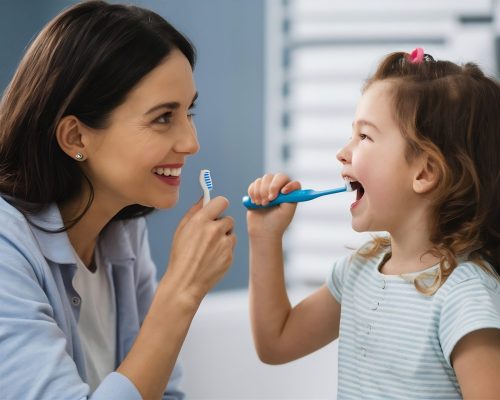
As a parent, you already know the struggle. You remind your child to brush. They sigh, roll their eyes, or simply “forget.” You check the toothbrush in the morning, and it’s bone dry. Sound familiar?
You’re not alone. Teaching kids good oral hygiene habits is one of the most common challenges parents face. The good news? It doesn’t have to be a daily battle. Our pediatric dental specialists (Dr. Rahul Lodaya, Pediatric Dentist and Dr. Supriya Lodaya, Dental Surgeon) believe that building a lifetime of healthy smiles starts with making oral care fun, consistent, and age-appropriate.
Here is your practical, parent-friendly guide to turning toothbrushing from a chore into a habit.
Why Habits Matter More Than Motivation
Motivation comes and goes. Habits stick. Research shows that habits formed in childhood often persist into adulthood. When you help your child establish strong oral hygiene habits early, you aren’t just protecting their baby teeth—you are programming their future behavior.
The goal isn’t perfection. It’s consistency. A so-so brushing session done twice daily is far better than a perfect brushing session done only occasionally.
Age-by-Age Guide to Building Habits
Birth to Age 2: The Foundation Stage
Your Role: You are the sole caretaker of your child’s oral health.
- Even before teeth appear: Wipe your baby’s gums with a soft, damp cloth after feedings. This gets them comfortable with having their mouth cleaned and prevents oral thrush.
- First tooth appears: Switch to a soft, infant-sized toothbrush with a smear of fluoride toothpaste (grain-of-rice size).
- Make it routine: Attach brushing to an existing habit—after the morning bottle and before the bedtime story.
Ages 2-5: The “I Want to Do It Myself!” Stage
Your Role: Supervise, assist, and keep it positive.
- Let them hold the brush: Give your child their own toothbrush to “practice” while you follow up with a thorough cleaning. It gives them a sense of independence.
- Use a timer: Two minutes feels like forever to a toddler. Use a sand timer, a brushing app, or play their favourite two-minute song.
- Spit, don’t rinse: Teach your child to spit out the toothpaste but not rinse with water. This leaves a small amount of fluoride on teeth for extra protection.
- Visit the dentist early: The first dental visit by age one sets the stage for positive associations. Our pediatric dentists are specially trained to make these early visits warm and fun.
Ages 6-9: The “I Can Do It Alone!” Stage
Your Role: Gradual independence with regular spot-checks.
- Hand over responsibility—with supervision: By age 6 or 7, many children have the manual dexterity to brush effectively. However, spot-check their work and re-brush missed areas at night.
- Introduce flossing: Once teeth touch, flossing is non-negotiable. Floss picks can make this easier for small hands.
- Consider sealants: Permanent molars erupt around age 6. Ask us about dental sealants—a protective coating that prevents 80% of cavities in these vulnerable teeth.
Ages 10+: The “I Know Everything” Stage
Your Role: Trust but verify. And keep the conversation open.
- Address bad breath privately: Halitosis is often the first sign of poor brushing. Frame it as health, not criticism: “I noticed your breath is a bit strong lately. Let’s make sure we’re reaching the back teeth.”
- Connect oral health to overall health: Teens respond to facts. Explain that gum inflammation is linked to heart health and diabetes.
- Protect their smile during sports: If your child plays sports, a custom mouth protector is essential. Store-bought options don’t offer the same level of protection.
4 Creative Strategies That Actually Work
1. The “Brush Your Teeth” Chart
Create a simple chart with morning and evening columns. Let your child place a sticker after each successful brushing. After a full week of stickers, celebrate with a non-food reward—a trip to the park, extra screen time, or choosing a movie.
2. Let Them Choose Their Tools
A toothbrush featuring their favourite cartoon character, toothpaste with a mild flavour they enjoy, or a colourful floss pick can transform resistance into enthusiasm. A small sense of ownership makes a big difference.
3. Model the Behaviour
Children learn far more from what they see than what they’re told. Brush your teeth alongside your child. Make it a family activity. Talk positively about why you value your own smile.
4. Don’t Weaponize the Dentist
Never use the dentist as a threat (“If you don’t brush, the dentist will give you a shot!”). This creates anxiety and associates dental visits with punishment. Instead, frame us as your partner: “Let’s show Dr. Rahul Lodaya how clean you’ve kept your smile!”
The Non-Negotiable: Professional Prevention
Even the most diligent home care cannot replace professional cleanings and examinations. Plaque hardens into tartar, which only a dental professional can remove. Regular check-ups allow us to:
- Detect small cavities before they become big problems.
- Provide fluoride treatments to strengthen enamel.
- Monitor growth and development to catch orthodontic issues early.
- Reinforce your teaching with our own positive, expert guidance.
Is it time for your child’s check-up? Let our friendly team at Smile Bay Kids in Rahatani, Pune: Near Pimple Saudagar, Near Wakad, support the habits you’re building at home. We specialize in making dental visits positive, educational, and even fun.
Schedule a consultation with our pediatric dentists today. Together, we can raise a generation of cavity-free, confident smiles.
📞 Call to Book: +91 94202-82079
🌐 Website: https://smilebaykids.com