
Can Cavities Spread from Baby Teeth to Permanent Teeth?
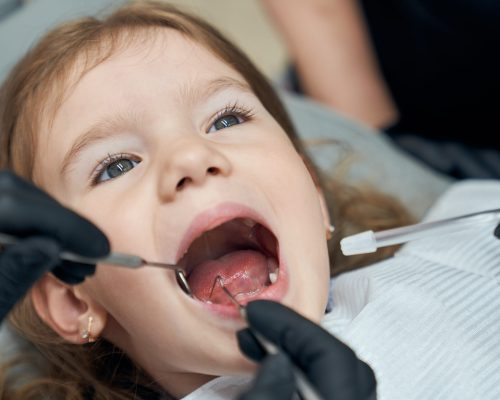
As a parent, you’ve probably wondered: “If my child has a cavity in a baby tooth, can it hurt the permanent tooth growing underneath?”
It’s an excellent question. And the answer matters for your child’s lifelong smile.
At Smile Bay Kids in Pimpri Chinchwad, we help parents understand how cavities work—and how to protect both baby and permanent teeth.
Let’s get straight to the answer.
The Short Answer
A cavity itself does NOT “spread” like a cold from one tooth to another.
But untreated cavities in baby teeth CAN cause permanent damage to the developing adult teeth beneath them.
Here’s how.
How Baby Teeth and Permanent Teeth Are Related
Under every baby tooth, a permanent tooth is growing inside the jawbone. Think of it like this:
- Baby tooth = a tent above ground
- Permanent tooth = a seed growing in the soil below
When the baby tooth is healthy, the permanent tooth develops safely underneath.
When the baby tooth gets a deep cavity, that’s like a leak in the tent. The infection can travel down through the root and into the bone—right where the permanent tooth is forming.
3 Ways Cavities in Baby Teeth Can Harm Permanent Teeth
1. The Infection Can Damage the Developing Permanent Tooth
A deep cavity that reaches the pulp (nerve) of a baby tooth can cause an abscess—a pocket of infection at the root tip. This infection sits directly above the permanent tooth bud.
What can happen:
- The permanent tooth may erupt with white or brown spots (enamel hypoplasia)
- In severe cases, the permanent tooth may be malformed or fail to develop properly
Prevention: Treat cavities early with dental fillings. If decay reaches the nerve, a pulpotomy (baby root canal) can remove the infection and save the tooth—and protect the permanent tooth underneath.
2. Premature Loss of Baby Teeth Causes Crowding
When a baby tooth is lost too early (due to severe decay or extraction), the neighboring teeth shift into the empty space. When the permanent tooth is ready to come in, there’s no room.
The result: Crooked, overlapping permanent teeth that may need orthodontics (braces) later.
Prevention: If extraction is unavoidable, we place a space maintainer to hold the gap open for the permanent tooth.
3. Cavity-Causing Bacteria Can Spread to New Teeth
The bacteria that cause cavities (Mutans streptococci) live in your child’s mouth. If baby teeth are full of cavities, there are more of these bacteria present.
When a new permanent tooth erupts, it is immediately exposed to that high level of cavity-causing bacteria, making it more likely to develop cavities quickly.
Prevention: Reduce bacteria by treating cavities early, brushing twice daily with fluoride toothpaste, and visiting us regularly for fluoride treatments and dental sealants on new permanent molars.
Does the Cavity Itself Jump from Tooth to Tooth?
No. A cavity is a hole, not a germ. You can’t “catch” a cavity from another tooth.
However, the bacteria that cause cavities can spread from tooth to tooth—especially if your child shares utensils, cups, or kisses someone with active cavities.
That’s why we recommend:
- Not sharing spoons or cups between family members
- Avoid cleaning a pacifier with your own mouth
- Treating cavities in all family members
What Happens If We Ignore a Cavity in a Baby Tooth?
Some parents think: “It’s just a baby tooth. It will fall out anyway. Why treat it?”
Here’s what can happen if you ignore a cavity:
Stage | Problem |
Small cavity | Pain when eating hot/cold foods |
Deep cavity | Constant toothache, infection |
Infection reaches nerve | Need for pulpotomy or extraction |
Untreated infection | Abscess, swelling, fever |
Premature tooth loss | Space loss → crooked permanent teeth |
The bottom line: Treating a small cavity with a simple filling is much easier than fixing the long-term damage of ignoring it.
How to Protect Permanent Teeth from Baby Tooth Cavities
✅ Treat Baby Tooth Cavities Early
The best protection is to keep baby teeth healthy. At the first sign of a cavity (white spots, brown marks, or pain), schedule a visit. We offer pain-free fillings for kids.
✅ Ask About Pulpotomy (Baby Root Canal)
If decay has reached the nerve, a pulpotomy removes the infected pulp, seals the tooth, and places a stainless steel crown. This saves the baby tooth and protects the permanent tooth underneath.
✅ Use Fluoride and Sealants
- Fluoride treatments strengthen enamel on both baby and permanent teeth
- Dental sealants protect the deep grooves of permanent molars as soon as they erupt
✅ Don’t Delay Treatment
Every month you wait, the cavity can grow deeper—closer to the nerve and the permanent tooth below.
✅ Regular Check-Ups Every 6 Months
We monitor both baby and permanent teeth, catch problems early, and keep bacteria levels low with professional cleanings.
When to Call Smile Bay Kids
Bring your child for a check-up if you notice:
- White or brown spots on any tooth
- Your child complains of tooth pain
- Swelling or pimple on the gum
- A baby tooth turning dark
- A baby tooth falling out much earlier than expected
The Bottom Line
Cavities in baby teeth can’t “spread” directly to permanent teeth like a rash. But the infection, bacteria, and early tooth loss caused by untreated cavities can seriously harm the permanent teeth developing beneath.
Protecting baby teeth = protecting permanent teeth.
At Smile Bay Kids, we specialize in gentle, child-friendly dental care. From simple fillings to pulpotomies and space maintainers, we’re here to save baby teeth and safeguard your child’s future smile.
Don’t wait for a small problem to become a big one. Let our pediatric dental team in Pimpri Chinchwad examine your child’s teeth and give you peace of mind.
Schedule a consultation with Dr. Rahul Lodaya at Smile Bay Kids today.
📍 Location: Dr. Rahul Lodaya, Pediatric dentist, Smile Bay Dental Care, Rahatani, Pune: Near Pimple Saudagar, Near Wakad.
📞 Call to Book: +91 94202-82079
🌐 Website: https://smilebaykids.com